
 24 Aug, 2026
Online scams are becoming more advanced, and fraudsters are now using professional communication platforms to target employees. A recent case in Mumbai shows how dangerous these scams can be.
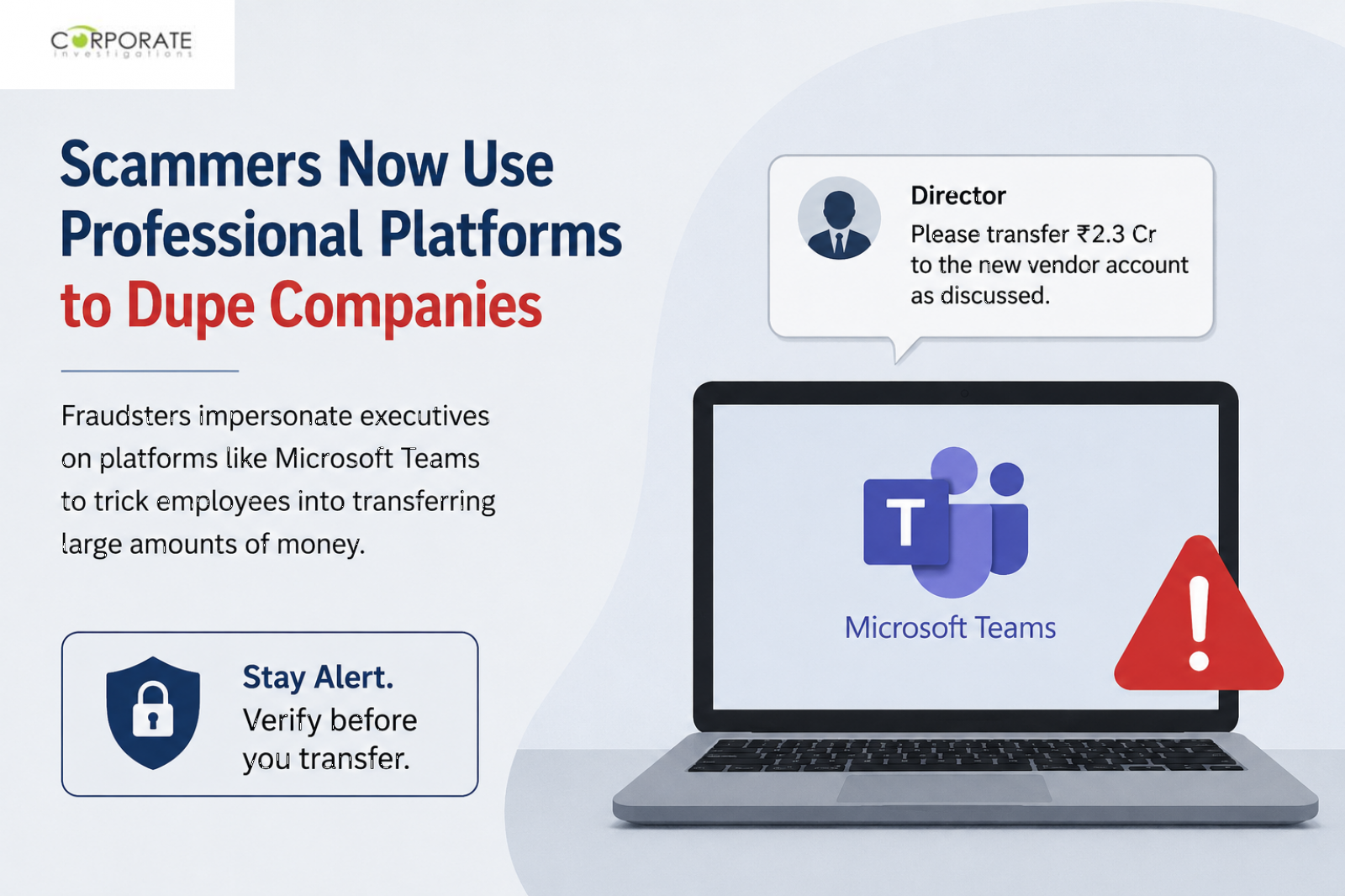
Scammers created a fake group chat on Microsoft Teams using the names and profiles of two company directors. They made the conversation look genuine by discussing a business deal. Since the company regularly used Teams for official meetings, a senior finance executive did not immediately suspect anything was wrong.
The fake directors then instructed the employee to transfer %u20B92.3 crore to a company account in Bengal. Believing the instructions were genuine, the employee asked a subordinate to make the payment.
Later, another employee questioned the transaction. This raised suspicion, and the company quickly discovered that the directors had never been part of the group chat or requested the payment. The company immediately contacted the police. Fortunately, the authorities were able to block the money in the beneficiary's account before it could be withdrawn.
This incident is an important warning for businesses. Employees should always verify unusual payment requests through a separate communication channel, even when the message appears to come from a senior executive. Companies should also train employees about impersonation scams and introduce strong approval processes for large financial transactions.
Staying alert and verifying every unusual request can prevent major financial losses.
Delivering accurate insights with integrity and excellence to empower your decisions.
